
Community Feature
Mobilizing a Rapid Response to Feed Michigan Families

When a temporary federal pause in Supplemental Nutrition Assistance Program (SNAP) benefits created uncertainty for thousands of Michigan families in 2025, Michigan philanthropy quickly mobilized, working in coordination with nonprofit partners and other service providers to swiftly support children and families facing urgent and widespread food insecurity.
The Michigan Health Endowment Fund (Health Fund) authorized $2.5 million in rapid-response funding. With a grant to GiveDirectly, the Health Fund provided direct relief to families through deposits to benefits cards, while also partnering with over a dozen local and regional funders to strengthen food assistance organizations in communities across the state.
As the pause unfolded alongside broader federal policy changes, the Health Fund recognized both the urgency of the moment and the limits of philanthropy’s role.
“We recognized that philanthropy cannot fill the holes left by sudden stoppages or dramatic cuts to government programs. However, we did see an opportunity—by working strategically and together with other funders— to help soften some of the most severe impacts in the short term and help communities prepare for what was coming,” said Kari Sederburg, the Health Fund’s vice president of programs.
The Governor’s Office of Foundation Liaison (OFL) had been leading conversations with state partners and funders to understand how they were responding and identify any gaps for collective action. OFL’s efforts led to a connection with GiveDirectly and its partnership with Propel. From there, OFL convened a statewide funder call, in partnership with CMF, to connect more than 150 CMF members on this critical issue.
“It was that important connection where we said, ‘Okay, it looks like there’s something here.’ Let’s work to bring other funders together…to look at a more collaborative approach to this very challenging issue,” Sederburg said.
According to Sederburg, the Health Fund had a two-part strategy to this response effort. The first phase of the response focused on direct assistance. Using data to identify households with the highest SNAP utilization rates, the Health Fund aimed to quickly get resources to those most affected.
“We were able to pull the data to say, ‘if we can raise $1.7 million, we can at least get money on those cards of those families in greatest need during that pause,'” Sederburg said.
A collaborative group, including the Health Fund, the Kalamazoo Community Foundation, and a Southeast Michigan family foundation, came together to support the effort.
The Health Fund then engaged its board on this opportunity to support families, and the board approved a grant to leverage the investments of funding partners. In total, the initiative reached approximately 7,800 families, with the Health Endowment Fund’s investment supporting more than 2,000 households.
“Our board is very supportive of being nimble enough to respond to what the needs are in community and reacting very quickly when federal changes happen. We’re really paying attention to what’s happening. How is environment changing? How are funding sources changing?” Sederburg said. “The other part of our strategy was really looking at, how are we supporting organizations in community that are serving people being impacted by the SNAP cuts and the SNAP changes related to H.R. 1.”
H.R.1 is a sweeping piece of legislation passed in 2025 that will make major changes to federal benefits programs, including SNAP and Medicaid. The new law is projected to result in funding cuts and reductions in benefits and enrollment in Michigan.
Almost immediately after the CMF member call, the Health Fund took steps to launch a separate Rapid Response Fund.
“We heard from community foundations from across the state saying, ‘our communities are struggling in the near term with this surge in need from the SNAP freeze,’” Sederburg said.
In response, the Health Fund established a $1.75 million Rapid Response Fund to support community-based organizations and local and regional foundations. The Health Fund prioritized areas with high SNAP utilization and lower levels of philanthropic investment, particularly in rural communities.
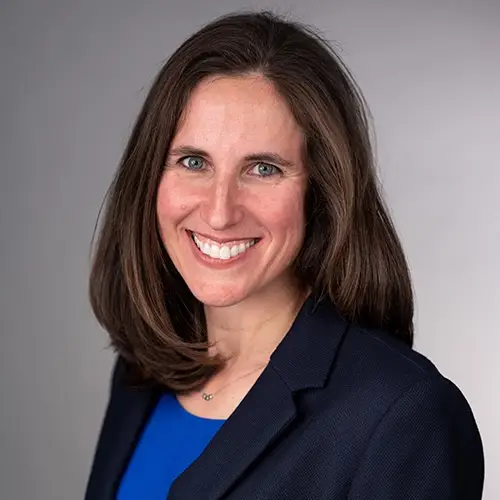
“It was clear that by working with and through organizations immersed in their communities, we could help make a greater impact at the local levels in places where the need was high.”
— Kari Sederburg, Vice President of Programs, Health Fund
Ultimately, the Health Fund distributed 13 grants, most through community foundations, which played a key role in directing funds where they were most needed. In one instance, a community foundation identified a local organization better positioned to lead the work—an example of how trust-based partnerships shaped decision-making.
Equity remained central to the approach for the Health Fund, always taking into account all different types of needs.
“We try to have equity at the heart of everything we do. In this specific experience with GiveDirectly, they were able to pull a lot of data to look specifically at communities, at the family level. We looked at utilization rates and demographics, really making sure we were showing up as much as possible,” Sederburg said.
The Health Fund isn’t sure if another rapid response will be needed, but the value of being nimble and networked was an important lesson from the SNAP experience that they plan to carry forward.
“A lot of folks think of ‘nimble’ when they hear about rapid response, but they don’t think of ‘networked,’ which is just as important. Working in a network of funders and other institutions enables a kind of speed and makes available knowledge that we don’t have to address different needs in various communities,” Neel Hajra, CEO of the Health Fund, said.
While philanthropy provided critical, temporary support to Michigan children and families in response to the extended delay in SNAP benefits, such solutions are not sustainable.
For instance, the cost to fully fund the SNAP program in Michigan is estimated at $3 billion annually. The annual grantmaking of 200+ foundations across CMF’s membership totals roughly $2.1 billion, meaning that even if every grant dollar were dedicated to this purpose, Michigan philanthropy cannot fill the gaps left by government.
Consistent and reliable government funding is essential to support the vital safety net that reduces poverty and provides essential support for food, housing and healthcare.
“We can’t know what’s happening in every community, though we can lean on our trusted partnerships with other CMF members. The OFL and CMF play vital roles in convening and connecting our membership, which I think continues to pay dividends,” Hajra said.
As philanthropic organizations continue to navigate uncertainty, Michigan philanthropy’s SNAP pause response offers an example of effective action that depends not only on speed, but on the strength of the relationships behind it.
“We’ve all known partnerships and collaboration are important, but I think it’s become even more so throughout all of the changes our sector and communities have experienced in 2025,” Sederburg said.